Potatoes
Planting
Companion Planting
- Best Herbs:
- Cilantro, basil, parsley
- Attracts beneficial insects and repel pests (ex. potato beetles)
- Cilantro, basil, parsley
- Best Vegetables:
- Cabbage family veggies: broccoli, kale, cabbage, cauliflower
- Shallow roots don’t compete with potatoes
- Alliums: chives, garlic, onions, leeks
- Repels pests due to strong smell
- Garlic, in particular, has natural anti-fungal properties which treats potato blight
- Legumes: beans and peas
- Legumes enrich soil with nitrogen which potatoes need plenty of
- Cabbage family veggies: broccoli, kale, cabbage, cauliflower
- Best Flowers:
- Marigolds
- Repels pests due to strong smell
- Alyssum
- This is a low-ground flower that attracts beneficial insects, and repels pests, especially aphids
- Nasturtiums
- Acts as a trap crop (distracts certain pests from potatoes) and attracts beneficial insects
- Marigolds
Growing/Maintenance
Harvesting
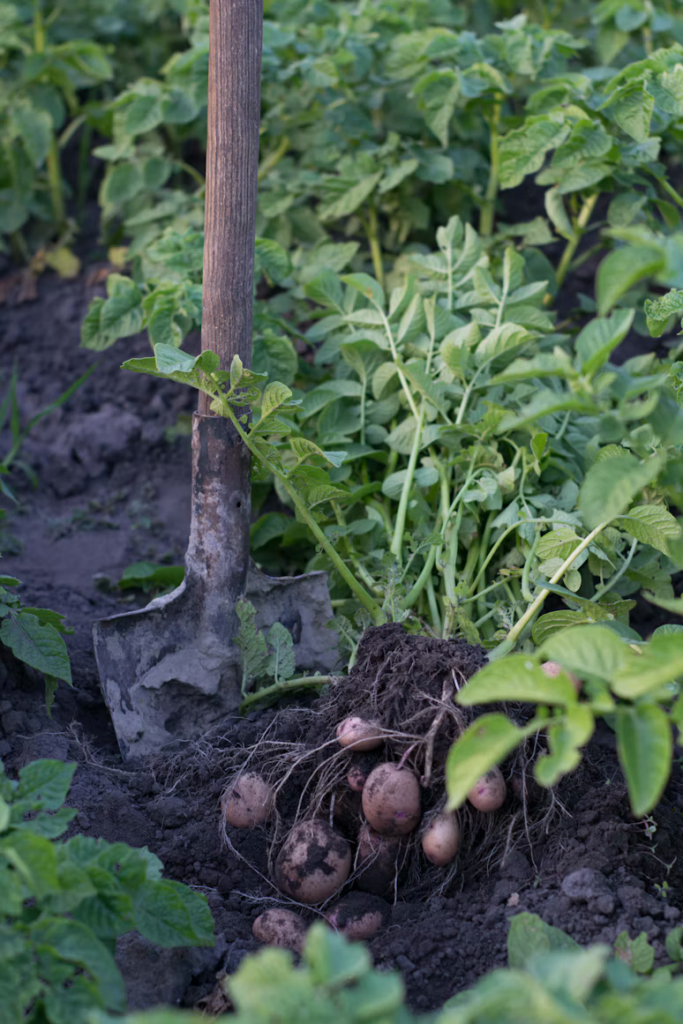
- Potatoes intended to be consumed for fall can be dug up when plant foliage turns yellow, withers, and dies.
- Potatoes intended to be stored for winter use, wait until the potato plant foliage turns yellow, withers, and dies. Then, wait for 1 to 2 weeks after the top plant foliage has died before digging up potatoes. This allows the potato skins to harden and thicken, which will prevent decay during storage. Dig potatoes up on a dry day and avoid puncturing potatoes.
Storage
- Do not wash potatoes before storing, the extra moisture will cause rot.
- Store potatoes in a cool, dry, dark place.
- When storing potatoes, place them in a ventilated container (ex. wooden crate).
- Do not store potatoes next to high-ethylene fruits and vegetables, such as apples, onions, bananas, tomatoes, peaches, avocados, etc. These fruits release ethylene gas which naturally causes potatoes to ripen and sprout much faster than normal.